Home
RECENT WORK
Papers:
-
- Why it makes sense to consider field of education to predict political behavior: The case of GAL/TAN voting. APSR (accepted March 2024) NEW
- The Russian threat and the consolidation of the West. EUP (online first, March 2024) NEW
- Transformation of the political space – A citizens perspective. EJPR (online first, April 2023)
- The social roots of the transnational cleavage: Education, occupation, sex. RSCAS Paper 2022/53 (July 2022)
Data:
-
- RAI data on regional authority (1950-2018) for 96 countries (05/15/21)
- MIA data: international authority (1950-2019) || IO policy scope (1950-2017)
- CHES-Europe trend (1999-2019) || CHES-Latin America 2020 (06/01/22)
- NEW — SPECIAL CHES EDITION ON UKRAINE WAR (02/08/24)
Teaching:
-
- Keys to European Politics – 13 videos on the EU, multilevel governance, and the transnational cleavage
- NEW Catch-the-Eye Politics – The transnational cleavage: the societal shift that’s shaking up European politics (script by Jimmy Dögerl, Sept 2023)
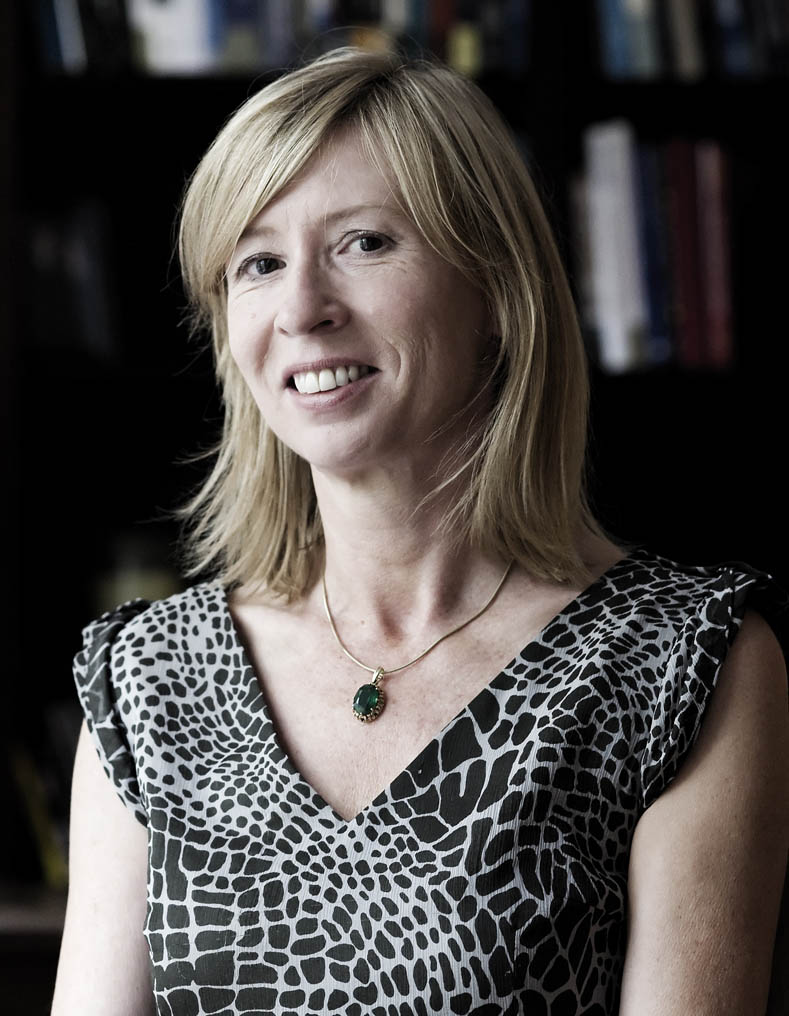
BIO: Liesbet Hooghe is the W.R Kenan Distinguished Professor of Political Science at the University of North Carolina at Chapel Hill and Research Professor at the Robert Schuman Centre for Advanced Studies, European University Institute, Florence. She was born and educated in Belgium (KU Leuven), taught at the University of Toronto (1994-2000), and moved to Chapel Hill in 2000. Hooghe has had fellowships & visiting professorships at Cornell University; Nuffield, Oxford; the EUI, Florence; the WZB Berlin; VU Amsterdam; Konstanz University; Hanse Wissenschaftskolleg Delmenhorst; Pompeu Fabra, Barcelona; IAS Vienna; Sciences Po-Paris; the Free University of Berlin. She is a former chair of the European Politics & Society section of the APSA and of the European Union Studies Association.
In 2017 she received the APSA Daniel Elazar Distinguished Federalism Scholar Award. In 2023 Hooghe was awarded the Martha Derthick Award by the Federalism & Intergovernmental Relations Section of the American Political Science Association for her co-authored book ‘Multi-Level Governance and European Integration.’ And on January 26, 2024, she received, jointly with Gary Marks, an Honorary Doctorate of Maastricht University for their work on multilevel governance. Hooghe is PI of a five-year advanced European Research Grant, Transnational – local triggers, social networks, and group identities (2021-2026), which seeks to explain political polarization in Europe and the US. The Transnational Lab is hosted at the RSCAS, EUI.
Hooghe’s research and teaching are chiefly in comparative politics, multilevel governance, international organization, political behavior, and measurement. She has published in the leading journals of political science. From 2010 to 2015, she was co-leading with Gary Marks an ERC-funded project on multilevel governance, summarized in four books published by Oxford University Press. To access data and publications, please click Regional authority (RAI) or International authority (MIA). Since 1999, Hooghe has also been a PI of the Chapel Hill Expert Survey (CHES) on political parties; to access data, please click here.
CV (Feb 2024) || Google Scholar || hooghe@unc.edu || liesbet.hooghe@eui.eu
Liesbet is back at the EUI to lead the ERC project from mid-January 2024 through the end of December 2024.
If you have difficulty navigating this website, try Microsoft Edge.
Last updated: Feb 8, 2024
